CSABA BENEDEK
BIO
Benedek Csaba is a photographer whose work is situated at the intersection of personal experience and social structures. His projects explore family relationships, generational experiences, and invisible systems - such as infrastructure, institutions, and spiritual and emotional frameworks - through visual and metaphorical approaches. His practice is often long-term and research-based, in which personal experience is translated into conceptual visual systems. His work examines silence, emotional distance, and the sustaining mechanisms that operate behind them, with particular attention to the relationship between individual lives and systemic forms of organization.
EDUCATION
2025-. Moholy-Nagy University of Art and Design Photography BA 2023-2025. Secondary School of Visual Arts, Training School for the Hungarian University of Fine Arts (adult education) Art and media photography 2015-2021. Karoli Gáspár University of the Reformed Church in Hungary English-History teacher
SCHOLARSHIPS
2019. Western Carolina University (USA) Scholarship exchange program
EXHIBITIONS
PURE FORMS, Group exhibition of Fejér János students, Bázis, Budapest, 2026 Drift of Grounds, Group exhibition, Liget Gallery, Budapest, 2026 Embertársaink, Group exhibiton, Metropolitian Ervin Szabó Library, Budapest, 2025
MEMBERSHIPS
2025-. Off Space (Odorhei) 2025-. Studio of Young Photographers
SELECTION OF WORKS
Like Father Like Water
Like Father Like Water examines the reinterpretation of the father-son relationship through the invisible, deep layers of urban infrastructure. The project originates from a childhood mystery. Every morning before sunrise, my father disappeared into a hidden facility to operate both our family’s life and the city of Budapest itself. It is a place the entire city depends on, yet about which almost no one knows anything. What is this hidden system that sustains collective life?
The infrastructure spaces my father inhabited are loud, repetitive, and industrial. They are strongly masculine environments, sealed inside uniforms and routines. This form of labor provides stability and survival but often leaves little room for emotional presence. Does the constant hum of machines and the industrial world seal away the souls of those who work there, or do emotions still persist beneath the surface?
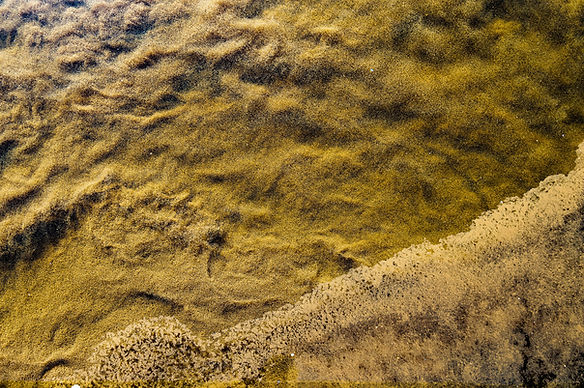
I realized this structure mirrored my relationship with my father: his work sustained our family but also created an emotional distance. I photographed floating textures, reflections, and unclear surfaces because they allow emotions to manifest without being illustrated directly. Water and waste function here as metaphorical spaces: layers that simultaneously refer to the metabolism of the city and the submerged relational dynamics within a family.
Like water flowing underground, many emotions in our relationship remained unseen, unspoken, and unresolved. Within these strange surfaces, I sought traces of suppressed feelings and the cause-and-effect relationships of accumulated relational burdens. The work reflects on the invisible systems that bind us together, the way individual lives diminish within vast structures, and the paradox of isolation and dependence.



Becoming Nothing, Becoming Everything
At 28, I belong to a generation that has been shaped by a world defined by instability, disillusionment, and a constant sense of urgency. My work functions both as a generational diagnosis and a personal narrative: it reflects on experiences gathered at the threshold of young adulthood, while also searching for answers to whether inner tensions can be resolved within such an environment.
My central themes include depression, burnout, identity formation, and economic precarity. These phenomena appear not only on an individual level, but also as social and systemic issues, shaping the self-image, life paths, and relationships of younger generations. For me, this work is not merely a diagnosis, but also a form of searching. In my own life, faith became the first true point of support - an inner resource that did not immediately solve my problems, but created space for hope, deceleration, and transformation.


Left Behind
According to biblical theology, the Rapture refers to an event where Christian believers - both living and deceased - are 'caught up' to meet Jesus Christ in the air. This departure creates a post-ascent landscape: a terrestrial vacuum where the Divine is no longer felt as an ambient presence, but sought as a desperate rescue. In this space of escalating catastrophe, those who realize their belonging to Christ too late undergo a radical transformation.
Existing as 'Living Voids,' these individuals navigate a world that has institutionalized its own spiritual absence. For this remnant, survival is no longer merely biological; it is the subversive maintenance of a vanished reality. Lived in the shadow of systemic persecution, their existence becomes a paradox: a late-stage faith that must endure the collapse of the material world to reach the one that has already departed.